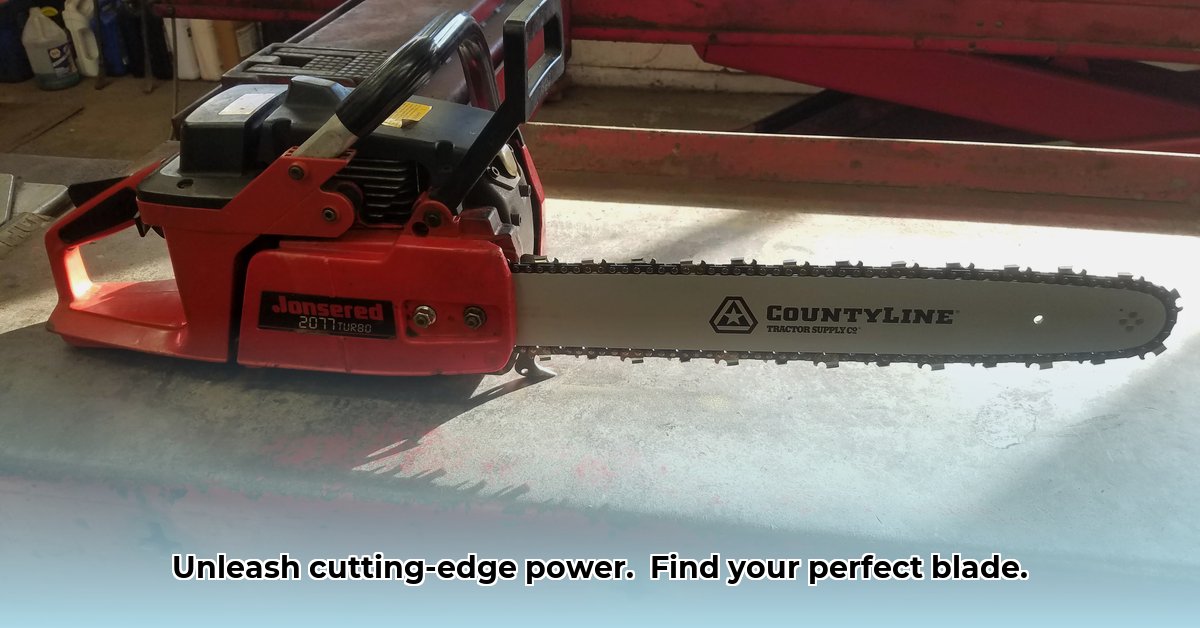
Choosing the right chainsaw blade significantly impacts your cutting experience – impacting efficiency, safety, and the lifespan of your equipment. This guide helps you navigate Tractor Supply's chainsaw blade offerings, ensuring you select the perfect blade for your projects. We'll cover blade types, matching blades to specific tasks, proper installation and maintenance, and crucial safety considerations. For more chainsaw bar information, check out this helpful resource.
Decoding Chainsaw Blade Types: More Than Just Teeth
Tractor Supply offers various chainsaw blades, each designed for specific applications. Understanding these differences is key to selecting the right tool for the job. Think of it like choosing between a hammer and a screwdriver – each has a unique purpose.
Carbide-Tipped Blades: These incredibly durable blades feature small, hard carbide teeth ideal for tackling dense hardwoods or frozen wood. While more expensive, their longevity makes them a worthwhile investment for demanding tasks.
Full Chisel Blades: Known for their sharp, aggressive teeth, these blades excel at cutting hardwoods. Their performance comes at the cost of needing more frequent sharpening.
Skip-Tooth Blades: These blades prioritize speed and smoothness, proving ideal for softer woods like pine or fir. The spaces between teeth reduce friction, resulting in faster cutting but potentially less durability for heavy-duty work.
Which type best suits your needs? The answer hinges on the wood you'll be cutting. Hardwoods demand the strength of carbide-tipped or full chisel blades, while softwoods benefit from the speed of skip-tooth blades. Don't forget to also consider your budget and how frequently you expect to use the blade.
Matching the Blade to the Job: A Practical Guide
The correct blade selection is paramount for efficiency and safety. Consider these guidelines:
Hardwoods (Oak, Maple, Hickory): Carbide-tipped or full chisel blades are your best bet. Their strength ensures efficient cuts in dense wood. While requiring more effort, the results and safety advantages make it worth it.
Softwoods (Pine, Fir, Spruce): Opt for skip-tooth blades for their speed and efficiency in cutting softer wood. These are ideal for projects where a smooth, fast cut is a priority.
Frozen Wood: This presents a challenge. While carbide-tipped blades offer the greatest chance of success due to their durability, extreme caution is vital. Frozen wood is prone to unpredictable splitting, making careful, slow cuts, and safety gear absolutely essential. Consider alternative methods if possible.
Beyond the Blade: Chain Pitch and Gauge – Crucial Specifications
Chain pitch (distance between three consecutive drive links) and gauge (thickness of drive links) are critical specifications that must match your chainsaw. Using mismatched components risks damaging your saw or causing injury. Always verify these details before purchasing, meticulously comparing them to your chainsaw's specifications and manufacturer's recommendations. Don't hesitate to consult Tractor Supply staff if you're unsure.
Installing and Maintaining Your Blades: A Step-by-Step Guide
Proper installation and regular maintenance are vital for safety and blade longevity.
Step 1: Safety First! Always disconnect the power source or turn off your chainsaw completely before any maintenance.
Step 2: Align and Secure: Carefully align the new blade with the bar, ensuring correct seating. Use the correct tools to tighten the chain according to your chainsaw's manual; avoid over-tightening.
Step 3: Regular Sharpening: A sharp chain minimizes kickback risk and enhances cutting efficiency. Regularly sharpen your blade using a suitable sharpener or seek professional assistance. The frequency depends on usage, wood type, and blade type.
Weighing the Pros and Cons: A Blade-Type Comparison
| Blade Type | Pros | Cons |
|---|---|---|
| Carbide-tipped | Exceptional durability; long lifespan; ideal for hardwoods | Higher initial cost; can be brittle under extreme stress |
| Full Chisel | Aggressive cutting; good for hardwoods; relatively affordable | Requires more frequent sharpening; not ideal for softwoods |
| Skip-tooth | Smoother, faster cuts in softwoods; less wear and tear on the chain | Less durable than carbide or full chisel; not ideal for hardwoods |
Troubleshooting and Safety: A Chainsaw User's Guide
Always prioritize safety. Wear appropriate safety gear—eye protection, hearing protection, gloves, and sturdy clothing—during all chainsaw operation. If the chain jams, immediately stop the saw and carefully diagnose the problem. Never force a jammed chain. Regular maintenance and proper blade selection greatly reduce accident risks. A well-maintained chainsaw with the right blade is significantly safer.
"A dull chain is a dangerous chain," says Dr. Emily Carter, Safety Specialist at the National Arborist Association. "Regular sharpening is not just about efficiency; it's about preventing accidents."
Remember, this information provides general guidance. Always consult your chainsaw's owner's manual for specific instructions and safety precautions. Safe and efficient chainsaw operation requires knowledge and practice.
Tractor Supply Chainsaw Blades
Content about tractor supply chainsaw blades (Auto-generated fallback due to API error).
Tractor Supply Chainsaw Blades
Content about tractor supply chainsaw blades (Auto-generated fallback due to API error).